


Stadium for Swag
40+ Company Swag Ideas Employees and Clients Keep (2026)
Skip swag that ends up in a drawer. Get 40+ company swag ideas people keep, how to choose them, and how to reach your team in 170+ countries.








Every office has one: the drawer. It holds the tangled earbuds that never charged, the stress ball with a peeling logo, and three flimsy pens from a conference nobody remembers. That drawer is where most company swag goes to die.
Here is the uncomfortable part. Most swag ends up there not because branded swag is a bad idea, but because it was ordered to fill a box instead of to be used. Someone had a budget, a deadline, and a vendor catalog, so they picked the cheapest thing that fit and called it done.
The result is wasted money, a brand impression that never happens, and, for an HR team, a recognition moment that lands with a shrug. For events, it is a booth giveaway headed straight for a hotel bin.
Good swag does the opposite. People wear it, carry it, and keep it on their desk for years. That is the whole difference, and it is entirely within your control.
This guide gives you a category-by-category menu of 40+ company swag ideas people actually keep, a simple framework for choosing them, and how to get them into recipients’ hands anywhere in the world, without the logistics drama.
No monthly fees.
No contracts.
Quick Navigation
What Is Company Swag? (Business Swag, Defined)
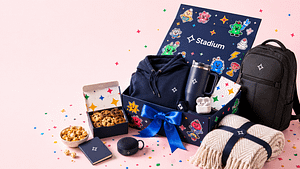
Company swag is branded merchandise a business gives to employees, clients, partners, or prospects to build connection, mark a moment, or extend its brand.
In a business context, swag is chosen as a gift or a promotion, not as generic giveaway filler, which is why the good stuff is useful enough that people keep it.
That line matters more than it sounds.
Generic swag is the logo pen ordered by the gross because it was the cheapest option on the page. Business swag is the item you would pick if you were buying a gift for someone whose opinion you cared about. Same logo, opposite result: one lands in the drawer, the other rides in a laptop bag for three years and gets a compliment at the airport.
For the buyer, swag is one of four ways a company shows up for its people, alongside recognition, snack boxes, and gifting. Stadium, the platform behind Swagmagic and Snackmagic, curates business swag from a catalog of 25,000+ products with exactly that in mind: the item is the gift, and recognition is the reason it matters. Choose the item well, and branded swag stops being clutter and becomes something people are genuinely glad to own.
Why Company Swag Still Works (When It's Done Right)
Swag has a reputation problem, and some of it is earned. But done right, it is not a throwaway. Swag is one of the few recognition tools a person can hold, use, and remember, and that is exactly what makes it worth defending to finance.
It makes recognition tangible
Recognition is one of the cheapest retention levers a company has, and most companies leave it on the table. Only one in three workers in the U.S. strongly agree that they received recognition or praise for good work in the past seven days, according to Gallup. That gap is expensive: employees who do not feel adequately recognized are twice as likely to say they will quit in the next year. A well-chosen piece of swag tied to a real moment, like a work anniversary, a closed deal, or a first day, turns an abstract "thanks" into something the person keeps. It is recognition they can see on their desk every morning.
It keeps your brand in view
A cheap tee becomes a rag; a good hoodie gets worn for years. That is the entire promotional case in one sentence. Quality branded swag stays in daily rotation, so it keeps working long after the meeting, the event, or the deal has closed. A backpack rides through airports. A tumbler sits in frame on every video call. The logo travels because the item is good enough to travel with, which is a return no ad spend buys.
It works for everyone you want to reach, not just employees
The same swag program can thank a client, warm up a prospect, and welcome a new hire. That range is easy to miss when you file swag under "employee perk." Treat it instead as a way to show up for anyone who matters to the business, and one program starts covering four audiences at once. Running recognition and swag from one platform is what keeps the gesture from sliding back into clutter: the item is chosen for a person and a moment, not ordered by the gross and hoped for the best.
How to Choose Company Swag People Keep
Most swag regret starts with one habit: choosing by unit price. The cheapest item that fits the budget is almost never the item people keep. A better rule is simple. Pick the thing the recipient would have bought for themselves. The five criteria below turn that rule into a repeatable filter you can run before every order, whether you are buying for 20 people or 2,000. The best swag vendors make this easier by curating for quality up front, so you are choosing among good options instead of sifting junk; Stadium curates its 25,000+ product catalog for that reason.

Match the swag to the audience
Employees, clients, and event crowds do not want the same things, so stop buying as if they do. Employees keep useful daily items like drinkware, outerwear, and bags. Clients read quality as respect, so material matters more than logo size. Event crowds reward fun and portable, because whatever you hand them has to survive a flight home. One quick test before you order: picture the specific person opening it. If you cannot picture them keeping it, you are buying filler, not a gift.
Spend on quality, not quantity
One item people use beats five they toss, every single time. The test is blunt: would the recipient replace it themselves if it broke? If yes, order it. If no, you are paying to manufacture clutter. Fewer, better units per person almost always beats spreading a thin budget across a big list. A single well-made hoodie earns more goodwill, and more brand impressions, than a grab bag of gadgets that stop working by Friday.
Design for everyday use
The best swag lives in daily life, so choose items that already have a place there: drinkware, outerwear, bags, tech. Then keep the branding tasteful. A subtle embroidered logo reads premium and gets worn; an oversized screen print reads like a billboard and gets skipped. The goal is branded swag people would wear even if it were not free. If a design only works as advertising, it will not survive contact with a real wardrobe or a real desk.
Set a budget per person, not per order
Per-order budgeting is how swag gets spread too thin. Flip it. Decide what one recipient is worth, then multiply out. Tiering helps: everyday employee swag might sit around USD 15 to 40 an item, while VIP clients, executives, and milestone gifts run higher. Per-person math keeps spend intentional and kills the "divide it by 300 and see what is left" trap that produces the flimsy-pen drawer in the first place.
Choose swag you can deliver
Here is the criterion everyone forgets until it is too late: can you actually get it to every recipient? A remote team, a global team, or an event crowd can turn a great order into a shipping headache fast. Decide up front whether you need bulk swag produced in volume or on-demand swag made per order, and confirm you can reach everyone before you fall for a specific item. That last step is where most programs break, so we solve it in detail below.
40+ Company Swag Ideas by Category

Two things are worth saying before the list. First, tangible rewards are no longer a fringe tactic; handing someone an item they can hold and use has become one of the most common ways companies recognize employees and clients alike. Second, the hard part is rarely picking the item. It is sourcing ten categories without chasing ten vendors, then getting everything produced, kitted, and delivered. That is where a single curated catalog earns its keep. Stadium can fulfill any idea below, from one unit to 1,000+, from the same 25,000+ product swag catalog, so one platform covers every category on this page.
Apparel Swag (The Everyday Keepers)
Apparel is the most-worn, most-kept category in swag, which is also what makes it the easiest to get wrong. Buy pieces people would wear off the clock, not just at the all-hands. Nail the fit and fabric and a single item earns years of wear; miss them and you have printed a very expensive rag.
Premium hoodies and quarter-zips
Vintage-soft tees
Embroidered caps and beanies
Branded socks
Outerwear and rainshells
Drinkware Swag (Desk-and-Bag Staples)
Drinkware is the safest category to get right: high keep-rate, low risk, and used in plain sight all day. The only way to lose here is to go cheap, because a flimsy cup gets replaced within a week while a good one lives on the desk for years.
Insulated tumblers (30 to 40 oz)
Vacuum water bottles
Ceramic and travel mugs
Stemless wine tumblers
Tech Swag (The High-Perceived-Value Category)
Tech punches above its cost. A modestly priced accessory can feel like a serious gift, which is what makes this category so strong for clients and prospects. The rule is to pick things people use constantly, because constant use means constant visibility.
Power banks and wireless chargers
Wireless earbuds
Webcam covers and cable organizers
Branded tech pouches
Wellness and Self-Care Swag
This category signals the company cares about the person, not just the logo, which is why it sits so close to recognition. Pick items that feel like a genuine gift someone gives themselves, and the gesture does as much work as the object.
Blankets and cozy throws
Candles and aromatherapy
Fitness bands and yoga kits
Self-care and spa kits
Desk and Office Swag
This is the category most likely to become clutter, so raise the quality bar hard. The test is brutal but fair: if it is not clearly better than what the recipient already owns, it becomes drawer filler. Order only the items that clear it.
Premium notebooks and journals
Quality pens (not the flimsy ones)
Desk mats and mouse pads
Sticky-note books and organizers
Bags and Travel Swag
Bags are portable brand impressions. They travel, so the logo travels, which makes this category one of the best returns on a single item. Match the bag to the trip the recipient actually takes and it becomes a default they reach for without thinking.
Backpacks and laptop totes
Duffle and weekender bags
Packable totes and coolers
Toiletry and tech travel kits
Food and Snack Swag
Snacks are the moment-maker: consumable, universally welcome, and zero clutter, because nothing has to be stored once it is enjoyed. It is the safest way to delight a mixed audience, since taste in food forgives far more than taste in apparel ever will.
Gourmet snack boxes
Coffee and tea kits
Celebration and treat boxes
Branded confectionery
Eco-Friendly and Sustainable Swag
Sustainability is where greenwashing lives, so name the material, not a vague sticker. Real recycled or renewable items get kept precisely because they are good, not because of a badge. Skip the “100% eco-friendly” label and let the actual material do the convincing.
Recycled-material apparel and bags
Reusable drinkware and utensils
Plantable and seed kits
Bamboo and cork accessories
Premium and High-End Swag (Clients, Execs, VIPs)
This is the tier most guides gloss over, and it is where swag stops being a giveaway and becomes a serious gift. Reserve it for the relationships and moments that justify the spend, and it does more for a key account than a dozen smaller touches.
Premium apparel and outerwear
High-end tech (earbuds, chargers)
Curated luxury gift boxes
Leather goods and accessories
Event, Tradeshow, and New-Hire Kits
Two jobs live here. Event swag has to be portable and booth-worthy; new-hire kits have to make someone feel they belong before day one. This is also where the bulk swag versus on-demand swag decision gets real, because handing out 500 items at a booth and shipping a personalized kit to a new remote hire are very different operations.
Booth giveaway bundles
Conference tote plus fill
New-hire welcome kits
Remote onboarding kit
Sending Swag Globally Without the Logistics Drama

Choosing swag is the easy part. Getting it to a distributed, global team is where good intentions turn into a spare closet full of boxes and a personal trip to the post office.
If half your recipients are remote and some are in other countries, the item you picked matters a lot less than whether you can actually get it into their hands.
There are two ways to run it. Bulk swag means ordering in volume up front, storing it, and shipping as needed, which makes sense when you need a lot of the same thing on a known date, like a booth or an all-hands.
On-demand swag means each item is produced and fulfilled per order, with nothing bought or warehoused in advance, which fits ongoing programs, new-hire kits, and anywhere you cannot predict sizes or timing. Most companies need both, at different moments.
Then there is the border problem. Send one bulk order across the world and you inherit customs forms, import duties, and surprise fees that sometimes cost more than the gift itself.
The fix is local fulfillment: instead of shipping everything from one place, the swag is warehoused regionally and fulfilled in the recipient’s own country.
Stadium fulfills swag in 170+ countries through 500+ warehouses, with on-demand and bulk in one platform and real-time inventory, so a gift to an employee in Berlin or Bangalore arrives in-region without the customs drama. Store it once, fulfill it locally, and skip the garage full of boxes.
GLOBAL SWAG SOLUTION
Create sleek, Customize-themed online swag stores
Ready to recognize employees in ways that actually land?
From thoughtful employee onboarding gifts to local fulfillment globally, we make it easy to recognize your team, wherever they are.

